VAT-Free & DDP Worldwide
Dive Deep Into Diamond And Jewelry Mastery
VAT-Free & DDP Worldwide

Your Cart

Diamond and Jewelery Education

Guide to choosing the right certified diamond for jewelry and investment

Choosing the Right Diamond for Your Needs

Understanding diamonds goes beyond the 4Cs. Whether you're purchasing a certified loose diamond, designing custom jewelry, investing in diamonds, or sourcing wholesale stones, selecting the right diamond depends on your purpose, budget, and quality preferences. At G.Eager Jewels, our specialists help individuals, jewelry brands, retailers, and manufacturers make informed decisions through expert guidance and access to premium certified natural and lab-grown diamonds.

Diamond Jewelry Care

Although diamonds are the hardest natural gemstone, they are not indestructible. Due to their natural cleavage planes, diamonds can chip if subjected to a sharp impact. Everyday oils, dust, and cosmetic residue can also reduce their brilliance over time. Proper care helps preserve both the beauty and longevity of your diamond jewelry.

Routine Cleaning

Clean your diamond jewelry regularly using warm water mixed with a mild, non-abrasive detergent. For a deeper clean, add a few drops of household ammonia and gently brush the jewelry with a soft-bristled toothbrush, paying close attention to the underside of the setting. Rinse thoroughly and dry with a lint-free cloth.

Handle with Care

Remove your diamond jewelry before participating in sports, gardening, heavy lifting, or any activity that may expose it to sudden impact. Even the hardest diamonds can chip if struck at the right angle, and excessive force may also loosen the setting.

Avoid Chemical Exposure

Apply lotions, perfumes, hairsprays, and cosmetics before wearing your diamond jewelry. Chemicals and beauty products can leave a residue on the diamond, reducing its sparkle, while certain substances may gradually affect the finish of precious metal settings, including rhodium-plated white gold.

Avoid Wearing During Bathing

Remove diamond jewelry before showering or bathing. Soap, shampoo, and conditioner can leave a thin film on the diamond's surface, diminishing its brilliance and making routine cleaning more difficult.

Professional Inspection & Cleaning

Have your diamond jewelry professionally inspected and cleaned at least once a year. A qualified jeweler can check for loose settings, worn prongs, and perform ultrasonic or professional cleaning to restore your jewelry's brilliance while ensuring it remains secure.

Gold Jewelry Care

Gold is a timeless precious metal valued for its beauty and durability. While naturally resistant to tarnish and corrosion, gold is relatively soft and can develop scratches or lose its shine with everyday wear. Proper care helps preserve the brilliance and longevity of your gold jewelry.

Avoid Harsh Chemicals

Remove your gold jewelry before using household cleaning products or swimming in chlorinated pools. Harsh chemicals, particularly chlorine, can weaken gold alloys over time and may cause structural damage, especially in lower-karat gold.

Minimize Contact with Cosmetics

Apply lotions, perfumes, hand sanitizers, and other beauty products before wearing your gold jewelry. These substances can leave residue on the surface, reducing its natural shine and affecting the finish of the metal.

Gentle Cleaning

Clean your gold jewelry using warm water and a mild, soap-free cleanser. Gently brush with a soft-bristled brush to remove dirt and buildup, then rinse thoroughly and dry with a soft microfiber or lint-free cloth to maintain its polished appearance.

Store with Care

Store gold jewelry separately in a soft jewelry pouch or lined jewelry box to prevent scratches caused by contact with other jewelry pieces. Proper storage helps maintain its finish and protects delicate settings.

Professional Maintenance

To restore your jewelry's original brilliance, have it professionally cleaned and polished periodically. White gold jewelry may require rhodium replating over time to maintain its bright, reflective finish, while routine inspections ensure settings remain secure and your jewelry stays in excellent condition.

Platinum Jewelry Care

Platinum is renowned for its exceptional durability, purity, and naturally hypoallergenic properties, making it one of the most sought-after precious metals for fine jewelry. While highly resistant to wear, platinum can develop surface scratches and a natural patina over time, enhancing its unique character.

Gentle Cleaning

Clean your platinum jewelry with warm water and a mild soap solution using a soft-bristled brush. Rinse thoroughly and dry with a soft, lint-free cloth. If your jewelry contains gemstones, avoid harsh commercial cleaners unless recommended by a professional jeweler.

Protect Against Scratches

Although platinum is highly durable, it can develop surface scratches through daily wear. Store each piece separately in a soft jewelry pouch or lined jewelry box to prevent contact with other jewelry and preserve its finish.

Avoid Harsh Chemicals

Remove platinum jewelry before using household cleaning products, swimming in chlorinated pools, or performing heavy manual work. Limiting exposure to harsh chemicals and impacts helps maintain the metal's natural beauty and structural integrity.

Natural Patina

Over time, platinum develops a distinctive satin-like patina that many appreciate as part of its character. If you prefer a brighter finish, professional polishing can restore its original shine without compromising the metal's quality.

Professional Maintenance

Have your platinum jewelry professionally inspected and cleaned periodically to ensure gemstones remain secure and the setting stays in excellent condition. Regular maintenance helps preserve its beauty and ensures lasting durability for generations.

Jewelry Storage and Security

Proper storage plays a vital role in protecting your fine jewelry from scratches, impact, and everyday wear. Following a few simple storage practices helps preserve the beauty, brilliance, and longevity of your diamonds, gemstones, and precious metals.

Store Each Piece Separately

Keep each jewelry piece in an individual fabric-lined jewelry box, soft pouch, or chamois bag to prevent scratches and unnecessary contact with other items. Diamonds, in particular, can scratch other gemstones and precious metals due to their exceptional hardness.

Make Jewelry Your Final Touch

Wear your jewelry after applying makeup, perfume, lotions, and hair products, and remove it before your daily skincare routine or bedtime. This minimizes exposure to chemicals, moisture, and cosmetic residue that can affect its appearance.

Protect Important Documents

Store diamond certificates, gemstone grading reports, purchase invoices, and insurance documents separately from your jewelry in a secure location. Keeping these documents safe helps preserve authenticity records and simplifies future valuations or insurance claims.

Travel with Care

When traveling, pack each jewelry piece individually in a padded travel jewelry case or soft cloth pouch to prevent scratches and impact damage. Keeping pieces separated also reduces the risk of tangling, abrasion, or accidental damage during transit.

Caring for Your Diamond Engagement Ring

An engagement ring is both a sentimental and material investment. Its longevity depends on consistent care and mindful handling.

  • Handling Technique: Always grasp the ring by its band, not the stone or setting, to avoid loosening the mount and transferring oils to the diamond.
  • Storage: Store separately in a rigid jewelry box. Avoid soft pouches, which offer insufficient protection against impact.
  • Activity Restrictions: Remove the ring during manual tasks and exposure to chemicals. This prevents structural stress and surface contamination.
  • Insurance: Secure comprehensive insurance to protect against loss, theft, or accidental damage.
  • Professional Inspection: If the stone appears loose or misaligned, consult a certified jeweler immediately. These evidence-based practices, grounded in gemological and metallurgical principles, will help preserve the integrity and beauty of your fine jewelry for generations.

Natural Diamonds vs Lab-Grown Diamonds

Both natural and lab-grown diamonds offer exceptional beauty, brilliance, and durability, but each serves different preferences and buying objectives. Natural diamonds are valued for their rarity and long-term investment potential, while lab-grown diamonds provide an ethical and cost-effective alternative with identical physical and optical properties. Understanding the differences helps buyers choose the right diamond based on lifestyle, budget, and purpose.

Diamond Shape

Each diamond shape has its own unique characteristics that influence its overall quality and appearance. The best shape for you depends on your personal style and the design of the jewelry you’re envisioning. Our seasoned experts are here to guide you in selecting the ideal solitaire that suits your taste and occasion.

Round

The round brilliant-cut diamond is the most popular shape worldwide, making up over 75% of all diamond sales. For nearly a century, diamond cutters have refined this shape using advanced light theories and precise mathematics to maximize its fire and brilliance. If you're looking for timeless sparkle, the round diamond is a classic choice.

Princess

Second only to the round in popularity, the princess cut is especially beloved in Europe. Its sharp corners and square shape give it a modern, elegant look. Known for its dazzling brilliance, it's a top pick for engagement rings. For optimal symmetry, choose a princess diamond with a length-to-width ratio between 1.00 and 1.05.

Emerald

The emerald cut features a rectangular, step-cut design with fewer facets, which can make inclusions and color more noticeable. Its clean lines offer a sophisticated, vintage appeal. For a classic emerald shape, aim for a length-to-width ratio between 1.30 and 1.40.

Aascher

Similar to the emerald cut but square in shape, the Asscher cut offers a unique, art-deco flair. Its ideal length-to-width ratio falls between 1.00 and 1.05, ensuring a balanced and symmetrical appearance.

Marquise

With its elongated body and pointed ends, the marquise cut creates the illusion of a larger diamond by maximizing carat weight. For a traditional marquise look, choose a length-to-width ratio between 1.75 and 2.25.

Oval

Oval diamonds combine the brilliance of a round cut with an elongated shape that flatters the hand, especially for those with shorter fingers. A length-to-width ratio between 1.35 and 1.65 offers the most balanced appearance.

Radiant

Radiant-cut diamonds feature trimmed corners and a cuboid shape, making them versatile for various jewelry styles. For a square radiant cut, look for a ratio between 1.00 and 1.05. Prefer a rectangular look? Choose a ratio above 1.25.

Pear

Also known as the teardrop cut, the pear shape blends a rounded end with a pointed tip. Its unique silhouette is popular for earrings, pendants, and rings. An elongated pear shape can subtly elongate the fingers for a graceful look.

Heart

The heart-shaped diamond is a romantic symbol of love and affection. Its distinctive shape makes it perfect for meaningful gifts and special occasions. Ideal length-to-width ratios range from 0.90 to 1.15 for a well-proportioned heart.

Cushion

Known as the “pillow cut,” the cushion diamond has rounded corners and a soft square or rectangular shape. It’s been a favorite for over a century. For a square cushion, aim for a ratio between 1.00 and 1.05; for a rectangular look, go above 1.25.

Baguette

The baguette cut is a sleek, elongated shape with straight edges and step-cut facets. Often used as side stones or accents, baguette diamonds offer a minimalist, elegant touch to any jewelry piece.

Diamond Carat

Carat refers to the weight of a diamond, not its size. As carat weight increases, so does the price—often exponentially. For example, a 2-carat diamond of the same quality will cost significantly more than a 1-carat diamond. Don’t confuse “carat” with “karat,” which measures gold purity.

  • 1 carat = 100 points (e.g., 0.75 carat = 75 points)
  • 5 carats = 1 gram
  • 1 carat = 0.200 grams

What Carat Weight Should I Choose?

Your ideal carat weight depends on your budget and preferences. While larger diamonds are more noticeable, beauty isn’t just about size. Cut, color, and clarity are equally important. You might opt for a smaller, higher-quality diamond or a larger one with lower grades—both can be stunning depending on your priorities.

Once you’ve chosen your desired cut, color, and clarity, it’s easier to find a carat weight that fits your budget. Visual guides can help you understand how different carat sizes appear when worn.

Expert Tips from G.Eager Jewels

  • Always check the millimeter (mm) measurements of a diamond—this reflects how large it will look when set in jewelry.
  • Diamond prices spike at full and half-carat marks (e.g., 0.50, 1.00, 1.50). Choosing a diamond just below these weights can offer better value with minimal visual difference.
  • Finger size affects perception: a 1.50-carat diamond looks larger on a size 8 finger than on a size 12.
DIAMOND COLOR

When evaluating diamond color, experts actually assess how colorless a diamond is. The less color present, the higher the quality and value. While most diamonds appear white, many contain subtle tints that can affect their appearance and price. These color differences are often invisible to the untrained eye but play a crucial role in grading.

Diamonds are graded on a scale that measures the absence of color—the clearer the diamond, the more valuable it is.

GIA Color Grading Scale

The Gemological Institute of America (GIA) developed a standardized scale ranging from D to Z:

  • D: Completely colorless and extremely rare—highest value.
  • E–F: Nearly colorless, with minute traces of color detectable only by experts.
  • G–J: Near colorless, offering excellent value with minimal visible tint.
  • K–Z: Noticeable color, typically yellow or brownish hues.

Each letter represents a range of tone and saturation, helping buyers make informed choices.

Which color to choose?

  • Colorless vs. Near Colorless: The visual difference is minimal, but the price gap can be substantial.
  • D–F Range: Ideal for those seeking perfection and purity.
  • G–I Range: Offers great value while maintaining a colorless appearance.
  • J–L Range: Suitable for larger diamonds or higher clarity within budget.
  • Shape Considerations: Fancy shapes like marquise, radiant, pear, and princess can concentrate color at their tips—opt for higher color grades in these cases.

Fluorescence

Fluorescence refers to a diamond’s reaction to ultraviolet (UV) light, often seen in environments like nightclubs. While usually invisible under normal lighting, strong fluorescence can give diamonds a milky or oily appearance, reducing their value.

However, fluorescence can enhance the appearance of yellow-tinted diamonds (J–M range), making them look whiter. In such cases, diamonds with faint to medium fluorescence may offer better visual appeal and value.

Tips from g.Eager jewels experts

  • Metal Matters: Yellow gold can reflect color into the diamond—consider I or lower grades. For white gold or platinum, F–H grades are ideal.
  • Grade Differences: The jump from G to H or I to J is subtle to the eye but significant in cost. More noticeable differences occur between D and G or G and J.
  • Size Sensitivity: Larger diamonds (1.50ct+) show color more clearly—choose higher grades accordingly.
  • Fluorescence Advantage: In J–M color ranges, fluorescence can make diamonds appear whiter.
DIAMOND CLARITY

Clarity measures a diamond’s internal (inclusions) and external (blemishes) characteristics. These natural features affect how light passes through the diamond, influencing its brilliance.

Most imperfections are microscopic and don’t impact beauty. However, larger or darker inclusions—like black “Natts”—can be visible and reduce value.

GIA Clarity Grades

Grade
Description
FL

Flawless – No inclusions or blemishes under 10x magnification. Extremely rare.

IF

Internally Flawless – No inclusions, only minor surface blemishes. Very rare.

VVS1/VVS2

Very Very Slightly Included – Inclusions are extremely difficult to detect.

VS1/VS2

Very Slightly Included – Minor inclusions, invisible to the naked eye.

SI1/SI2

RVery Slightly Included – Minor inclusions, invisible to the naked eye.

I1/I2/I3

Included – Obvious flaws that can affect brilliance and transparency.

What clarity grade to choose?

  • VVS1/VVS2: Ideal for those seeking near-perfect diamonds.
  • VS1/VS2: Great value—clean to the naked eye.
  • SI1/SI2: Budget-friendly options for larger size or better color.
  • Eye-Clean Diamonds: SI1 and VS2 often appear flawless without magnification.

Keep in mind: As diamond size increases, inclusions become more noticeable. A 2.00ct SI2 will show flaws more easily than a 0.30ct SI2.

Tips from g.Eager jewels experts

  • Under 1ct: Clarity is less critical—price differences are smaller.
  • 1–2ct Range: SI1 or better ensures minimal visible inclusions.
  • Over 2ct: VS2 or higher is recommended to avoid visible flaws.
  • Shape Sensitivity: Asscher and Emerald cuts reveal inclusions more easily—choose SI1 or better.
DIAMOND CUT

Cut is the only diamond characteristic shaped by human craftsmanship. It determines how well a diamond reflects light—affecting brilliance, fire, and sparkle. A well-cut diamond appears vibrant and lively, while a poorly cut one may look dull.

Cut includes proportions, polish, and symmetry. For round diamonds, all three are graded. For fancy shapes, only polish and symmetry are assessed.

Cut grades

Grade
Description
Ideal/Excellent

Reflects nearly all light—maximum brilliance and beauty.

Very Good

Reflects most light—great value.

Good

Adequate light reflection—budget-friendly.

Fair

Less brilliance—still a quality diamond.

Poor

RVery Slightly Included – Minor inclusions, invisible to the naked eye.

Which Diamond Cut Grade Should You Choose?

The cut grade is the most critical factor in determining a diamond’s overall beauty. Even a diamond with top-tier clarity and color can appear lifeless if it’s poorly cut. On the other hand, a well-cut diamond—even with slightly lower color (G-H) or clarity (SI1-SI2)—can still look stunning due to its ability to reflect light and create brilliance.

Recommended Cut Grades

  • For Maximum Sparkle: Choose a round diamond with a cut grade of Very Good or Excellent, and ensure the Polish and Symmetry grades are at least Good, ideally Very Good.
  • For Fancy Shapes: Avoid diamonds with Polish or Symmetry grades below Good.
  • For Top Quality: Look for a Triple Excellent diamond—graded Excellent in Cut, Polish, and Symmetry.
  • For Budget Buyers: If size is your priority, a diamond with a Good or Fair cut may be acceptable. It won’t sparkle as much, but you’ll get a larger stone for the same price.

Common Pitfalls to Avoid

  • Uncertified Diamonds: Be cautious—uncertified diamonds can be misleading in quality.
  • Deep Cuts: Avoid diamonds that are cut too deep. These hide carat weight in depth rather than width, making them appear smaller than they actually are. For example, a 1.00 carat diamond may look like a 0.90 carat if it’s too deep.
  • Trusted Certification: Always buy diamonds certified by reputable labs such as GIA, IGI, HRD.

Expert Tips from G.EAGER JEWELS

  • Prioritize Cut: Since cut affects beauty the most, balance your budget across Carat, Color, and Clarity to afford a diamond with an Excellent or Very Good cut.
  • Avoid Poor Cuts: Even if cheaper, a poorly cut diamond is not recommended. If budget is tight, opt for slightly lower color or clarity—but maintain a cut grade of Good or better.
Understanding Diamond Brilliance
  • Brilliance: The brightness created by white light reflecting from the diamond’s surface and interior.
  • Contrast: Light and dark areas caused by the cut or shadows—these are not flaws but part of the diamond’s visual depth.
  • Scintillation: Sparkles seen when the diamond moves. These flashes are strongest under bright, multi-directional lighting.
  • Fire: Colored flashes caused by light dispersion. More visible in darker settings and more vivid in colorless diamonds.

Key Diamond Terminology

Term
Definition
Diameter

Width across the diamond at the girdle.

Table

Largest facet on the top of the diamond

Crown

Top portion from the table to the girdle

Girdle

Widest edge where crown meets pavilion

Pavilion

Lower portion from girdle to culet

Culet

Small facet at the bottom tip

Depth

Total height from table to culet

Diamond Proportions

Diamond proportions refer to the size, shape, and angles of each facet. These determine how well the diamond interacts with light:

  • Pavilion Angle: Must be precise—too shallow or deep causes light leakage and dullness.
  • Crown Angle: Influences how light enters and exits the diamond.
  • Depth %: Depth divided by diameter. Shallow diamonds have low depth %, deep ones have high depth %.
  • Table %: Size of the table relative to the diameter—affects light performance.

Symmetry

Symmetry ensures that all facets are evenly aligned. Poor symmetry can distort the diamond’s shape and reduce brilliance, fire, and scintillation. Common issues include:

  • Off-center culets
  • Misshapen facets
  • Round diamonds that aren’t truly round.

Polish

After cutting, each facet is polished. Poor polishing leaves behind scratches or streaks, similar to marks after waxing a car. An Excellent Polish means the diamond has minimal or no visible surface marks.

Grading and Certification of Diamonds

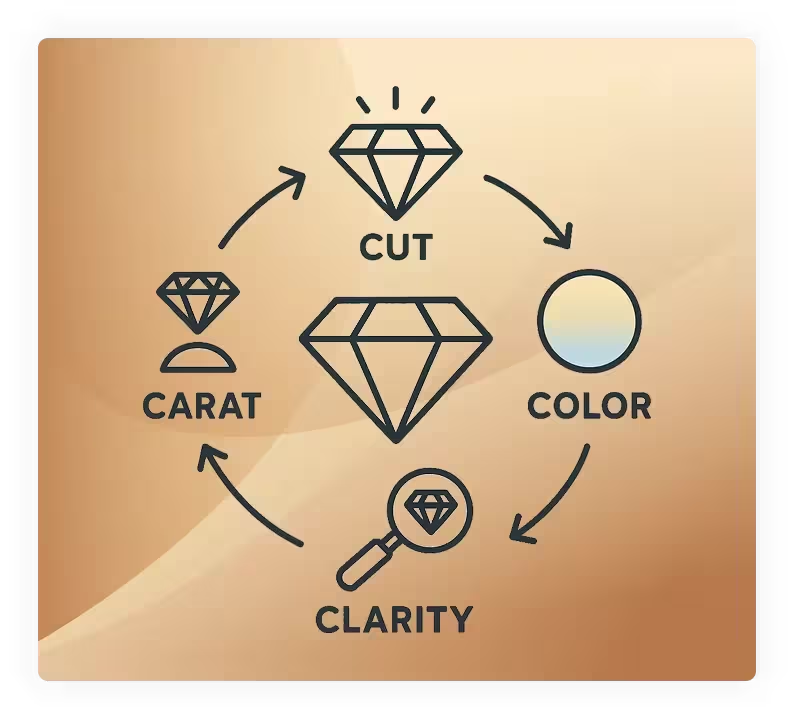
Diamonds are evaluated based on the 4Cs:

  • Color
  • Clarity
  • Cut
  • Carat weight

To ensure accuracy and consistency, grading is conducted by independent gemological laboratories such as:

  • GIA(Gemological Institute of America)
  • IGI(International Gemological Institute)
  • HRD(Hoge Raad voor Diamant)

At G.Eager Jewels, we exclusively offer diamonds certified by GIA, IGI, and HRD, and our diamond jewelry is graded by IGI and HRD. While other labs do exist, not all maintain the same rigorous standards. Some may be more lenient in their evaluations, which can affect the reliability and reputation of their grading.

Understanding Diamond Grading Nuances

Every diamond is unique, making it challenging to fit into rigid grading categories. For example:

  • A diamond labeled SI1 clarity actually falls within a spectrum—from the highest quality SI1 to the lowest.
  • The same applies to Color grades, which also span a range within each category.

At G.Eager Jewels, our team includes certified gemologists with extensive industry experience. Every diamond is carefully assessed by our experts and cross-verified with the official lab grading report to ensure accuracy and transparency.

Certified vs. Uncertified Diamonds

Certified Diamonds

A certified diamond comes with a grading report issued by an accredited gem lab. This report confirms that the diamond has been independently evaluated and meets the specifications listed.

Benefits include:

  • Assurance of quality and authenticity
  • Legal documentation of the diamond’s characteristics
  • Confidence in the diamond’s value and pedigree

Uncertified Diamonds

An uncertified diamond lacks a formal grading report. Its quality is based solely on the seller’s description.

Key points to consider:

  • It may still be beautiful and valuable
  • Without certification, you must trust the seller’s expertise
  • If you're not experienced in diamond evaluation, this can pose a risk
Diamond grading and certification for cut color clarity and carat
Gold and platinum properties purity and jewelry applications

Gold and Platinum: A Scientific and Cultural Overview

Gold: Properties, Purity, and Applications

Gold (chemical symbol: Au) is a noble metal with a rich historical and cultural legacy. Its distinctive yellow hue, high malleability, and resistance to oxidation and corrosion make it uniquely suited for ornamental and monetary use. Gold does not react with oxygen or most acids, which accounts for its enduring luster and stability over millennia.

Physical and Chemical Properties

  • Malleability and Ductility: Gold is the most malleable and ductile of all metals. A single gram can be beaten into a sheet covering one square meter.
  • Corrosion Resistance: As a noble metal, gold resists tarnishing and rust due to its low reactivity.
  • Color: Its yellow coloration arises from relativistic effects in its electron structure, a phenomenon unique among metals.

Purity and Karat System

Pure gold (24 karats) is too soft for practical use in jewelry. To enhance its mechanical strength, it is alloyed with other metals such as copper, silver, nickel, and zinc. The karat system quantifies purity as follows:

Karat
Gold Content
Suitability for Jewelry

24k

100%

Too soft

22k

91.7%

Limited use

18k

75.0%

Ideal for fine jewelry

14k

58.3%

Durable and popular

10k

41.7%

Generally not preferred

Alloying and Color Variations

The color of gold alloys depends on the type and proportion of secondary metals:

  • Yellow Gold: Achieved by alloying with copper and silver. The warm tone reflects traditional aesthetics and is often associated with wealth and prestige.
  • White Gold: Created by alloying with palladium, nickel, or silver, and typically plated with rhodium for enhanced brightness and durability.
  • Rose Gold: The pink hue results from a higher proportion of copper. While visually appealing, it may be less suitable for daily wear due to its relative softness.

Hallmarking Standards

In accordance with international hallmarking protocols such as the Vienna Convention, gold jewelry may be certified for purity and authenticity. In Europe, hallmarking is regulated under the Bureau of European Standards Act (1986). A hallmark typically includes:

  • Fineness number (e.g., 750 for 18k)
  • Assay center identification
  • Jeweler’s mark
  • Year code (alphabetical)

Laser engraving and punch marking are standard techniques for hallmark application, ensuring traceability and consumer confidence.

Platinum: The King of Metals

Platinum (chemical symbol: Pt) is a dense, ductile, and highly corrosion-resistant transition metal. Its silvery-white appearance and exceptional durability make it a preferred choice for high-end jewelry and industrial applications.

Material Characteristics

  • Density: Platinum is nearly twice as heavy as gold, contributing to its substantial feel.
  • Durability: Despite its softness, platinum is highly resistant to wear and chemical attack.
  • Purity: Jewelry-grade platinum typically contains 95% pure platinum, alloyed with iridium or ruthenium to enhance hardness.

Applications in Jewelry

Platinum’s neutral color and structural integrity make it ideal for securing gemstones, especially diamonds. Unlike gold, it does not wear away over time, ensuring long-term stability of stone settings.

Hypoallergenic Properties

Due to its high purity and inert nature, platinum is hypoallergenic and suitable for individuals with sensitivities to nickel or other common alloying metals.

Economic and Industrial Value

Platinum is rarer than gold and commands a higher market value. Beyond jewelry, it is critical in catalytic converters, electronics, and medical devices, underscoring its industrial significance.

Engagement Ring Buying Guide

Expert Tips by G.Eager Jewels

Choosing an engagement ring is one of the most meaningful purchases you'll ever make. At G.Eager Jewels, we believe the process should be exciting, educational, and tailored to your unique love story. Whether you're drawn to a classic solitaire or a dazzling halo, this guide will walk you through the essentials of selecting the perfect ring.

Step 1: Set Your Budget

G.Eager Tip: Forget outdated rules like “three months’ salary.” Your budget should reflect your comfort level and priorities.

  • Start with a range: This helps narrow down options without limiting creativity.
  • Balance stone and setting: A modest diamond in a stunning setting can be just as impactful.
  • Consider alternatives: Lab-grown diamonds and colored gemstones offer beauty and value.
Step 2: Understand Ring Types

Engagement rings come in a variety of styles, each with its own charm:

Type
Description
Solitaire

A single center stone. Timeless, elegant, and versatile.

Halo

A center stone surrounded by smaller diamonds. Adds sparkle and size.

Three-Stone

Symbolizes past, present, and future. Offers balance and symmetry.

Vintage

Inspired by historical designs. Features intricate details and filigree.

Modern

Bold shapes, mixed metals, and unique settings. Perfect for trendsetters.

Gemstone Rings

Sapphires, emeralds, rubies. Adds color and personality.

G.Eager Tip: Think about her lifestyle. Active wearers may prefer bezel or low-profile settings for durability.

Step 3: Choose the Right Stone Shape

The shape of the center stone influences both style and how it looks on the hand:

Shape
Vibe
Notes

Round

Classic

Most brilliant and universally loved

Oval

Elegant

Elongates the finger, modern appeal

Emerald

Vintage

Step-cut facets, sophisticated clarity

Princess

Modern

Square brilliance, youthful energy

Pear

Unique

Teardrop shape, flattering and bold

Heart

Romantic

Symbolic and expressive

G.Eager Tip: If she hasn’t dropped hints, observe her jewelry style—delicate vs. bold, gold vs. platinum, classic vs. trendy.

Step 4: Select the Setting Style

The setting holds the stone and defines the ring’s silhouette:

  • Prong: Classic and allows maximum light exposure.
  • Bezel: Sleek and protective, ideal for active lifestyles.
  • Cathedral: Elevated arches for elegance.
  • Tension: Modern floating effect, requires precision.
  • Pavé/Channel: Adds sparkle with side stones.

G.Eager Tip: Choose a setting that complements her personality and daily wear. Don’t forget to factor in metal type—white, yellow, rose gold, or platinum.

Step 5: Find Her Ring Size

Getting the right fit is essential:

  • Borrow a ring she wears on her ring finger.
  • Ask a close friend or family member.
  • Use a printable ring sizer or visit a jeweler.

G.Eager Tip: It’s easier to resize a ring down than up. When in doubt, go slightly larger.

Step 6: Learn About the 4Cs

Understanding the 4Cs—Cut, Color, Clarity, and Carat—helps you choose a diamond that balances beauty and value.

4Cs
What It Means
G.Eager Insight

Cut

Sparkle and brilliance

Prioritize cut for maximum impact

Color

Absence of hue (D–Z scale)

G–J offers great value with near-colorless look

Clarity

Internal flaws (inclusions)

VS1–VS2 are eye-clean and budget-friendly

Carat

Weight of the stone

Bigger isn’t always better—balance with cut

G.Eager Tip: Our consultants can help you find the best value-for-money diamond based on your preferences.

Step 7: Shop with Confidence

At G.Eager Jewels, we offer:

  • Best-priced solitaire and multi-stone options.
  • Certified diamonds and gemstones
  • Custom designs tailored to your story
  • Expert guidance from start to finish

G.Eager Tip: Buying online gives you access to more options and better pricing. Always check certifications (GIA, IGI, HRD) and return policies.

Final Thought

Whether you choose a classic solitaire, a vintage-inspired halo, or a vibrant gemstone ring, the most important thing is that it reflects her style and your love. At G.Eager Jewels, we’re here to make sure it becomes her most prized possession.

Image illustrating engagement ring selection and buying guidance
Image showing certified diamond evaluation and certification

Diamond Certification Matters

Every certified diamond provides confidence in its authenticity and quality. G.Eager Jewels supplies diamonds certified by internationally recognized laboratories, including GIA, IGI, and HRD, ensuring every stone has been professionally evaluated for cut, color, clarity, and carat weight. Certification enables buyers to make informed purchasing decisions while protecting long-term value.

Understanding Diamond Carat Weight

What Is a Carat?

A carat is a unit of weight used to measure diamonds and other gemstones. It does not indicate size, although many people mistakenly equate the two. The term originates from carob seeds, which ancient gem traders used as counterweights due to their uniform mass.

  • 1 carat = 200 milligrams (0.2 grams)
  • Carats are subdivided into 100 points, allowing precise measurement to the hundredth decimal place. For example:
    • 0.25 carats = 25 points
    • 0.10 carats = 10 points (often called “10 cents” in trade slang)

Carat vs. Karat

Don’t confuse carat (diamond weight) with karat, which refers to the purity of gold. They sound similar but measure entirely different properties.

Carat Weight vs. Diamond Size

While carat weight affects a diamond’s value, it doesn’t directly determine its visible size. The cut quality, shape, and depth of a diamond significantly influence how large it appears.

  • A 1.00 carat round brilliant typically measures 6.4–6.5 mm in diameter
  • A 2.00 carat diamond may not look twice as large as a 1.00 carat due to how weight is distributed within the stone

Diamonds with poor cuts may carry more weight below the surface (in the pavilion), making them appear smaller than well-cut stones of the same carat weight.

Carat Weight and Pricing

Diamond prices increase exponentially with carat weight due to rarity. For example:

  • A 2.00 carat diamond can cost significantly more than twice the price of a 1.00 carat diamond, even if other quality factors (cut, color, clarity) are equal

This is because larger diamonds are rarer and more desirable, especially at “magic sizes” like 1.00, 1.50, and 2.00 carats.

Carat Size Charts

Round Brilliant Diamonds (Approximate Diameter)

Carat Weight
Diameter (mm)

0.25 ct

~4.1 mm

0.50 ct

~5.2 mm

0.75 ct

~5.8 mm

1.00 ct

~6.4–6.5 mm

1.50 ct

~7.4 mm

2.00 ct

~8.2 mm

Note: These measurements assume an “Excellent” cut. Variations occur due to differences in cut proportions and depth.

Visual Impact on the Hand

When set in a ring, diamonds often appear 10–15% larger due to the surrounding metal and design. Finger size also affects perception:

  • On smaller fingers, even modest diamonds can look bold
  • On larger fingers, the same diamond may appear more delicate
Further Learning

For deeper insights into diamond grading and carat weight, explore:

GIA’s Carat Weight Guide

Certification & Hallmarking: The G.Eager Jewels Standard

At G.Eager Jewels, we believe that every diamond should be more than visually stunning—it should be scientifically validated, ethically sourced, and legally recognized across borders. That’s why our diamonds and jewelry are certified by the world’s most respected gemological laboratories and hallmarked under the European Convention for the Control of Precious Metal Articles.

Certified Diamonds

  • Graded by GIA, IGI, or HRD—the global authorities in gemological science
  • Evaluated using advanced spectrometry, photoluminescence, and 3D imaging to ensure precision across the 4Cs: Cut, Carat, Color, and Clarity
  • Verified by our in-house gemologists to meet the highest standards of brilliance and integrity

Certified Jewelry Mounts

  • Certified by IGI and HRD for gemstone setting quality and structural craftsmanship
  • Hallmarked under the Vienna Convention, recognized across 22 European and international member states

Diamond Jewelry

  • Certified by IGI – International Gemological Institute, the world’s largest independent lab for diamonds and fine jewelry. Using HRD as an optional certification grading when required.
  • Hallmarked with the Common Control Mark (CCM), ensuring legal recognition and consumer protection across Europe
Why Certification Is Essential

Diamond certification is not just a label—it’s a scientific and legal guarantee. Each certified diamond undergoes rigorous analysis using high-resolution imaging, laser inscription, and spectroscopic fingerprinting. This ensures:

  • Objective Grading: The 4Cs are assessed using standardized metrics developed by GIA, now adopted globally
  • Laser Inscriptions: Unique ID codes etched onto the diamond’s girdle for traceability and fraud prevention
  • Origin Disclosure: Certification distinguishes between natural and lab-grown diamonds, supporting ethical sourcing

Intellectual Insight: The GIA International Diamond Grading System™ is the industry’s empirical framework, enabling consistent valuation across global markets

Leading Certification Bodies
Laboratory
Founded
Specialty
Global Reach

GIA (Gemological Institute of America)

1931

Invented the 4Cs; gold standard for natural diamonds

USA, EU, Asia

IGI (International Gemological Institute)

1975

Known for lab-grown and fashion jewelry grading

20+ cities worldwide

HRD Antwerp

1973

European authority; adheres to IDC grading rules

Strong presence in EU markets

GIA grading reports are used for insurance, resale, and legal documentation—trusted by auction houses and collectors worldwide.

European Hallmarking: The Common Control Mark (CCM)

Hallmarking in Europe is governed by the Vienna Convention on the Control of Precious Metal Articles, which ensures uniform standards and mutual recognition across member states.

CCM Hallmarking Benefits

  • Legal Recognition: Accepted in all 22 member countries, including Germany, France, Italy, Netherlands, Austria, and Switzerland
  • Consumer Protection: Guarantees the purity and authenticity of gold, silver, platinum, and palladium
  • Cross-Border Trade: Facilitates seamless movement of jewelry across European markets

Did you know? The Common Control Mark is applied by authorized assay offices and is legally equivalent to national hallmarks in all Convention member states.

Final Thought

In today’s global jewelry market, certification and hallmarking are not optional—they’re essential. They empower you to make informed, ethical, and intelligent choices. At G.Eager Jewels, we don’t just sell diamonds—we deliver scientifically validated brilliance, backed by international law and European trust.

Diamond and jewelry care guidance for long-term preservation

For more tips and insights on diamond and jewelry care.